
Open entry points
Ingest mainstream frameworks and open model formats without demanding a rewrite before evaluation.
 HOLYCORES
HOLYFLOW™ SOFTWARE STACK
One compiler, runtime, and developer experience from cloud systems to edge processors.
HOLYFLOW™ SOFTWARE STACK
Ingest mainstream frameworks and open model formats without demanding a rewrite before evaluation.
Compilation understands dataflow, memory hierarchy, parallel topology and product-level system boundaries.
Graph partitioning, operator mapping, memory use and communication cost remain inspectable.
Carry model assets from AETHER to NOVA and SPARK, recompiling and validating for each deployment scale.
THE STACK
Model ingestion, graph optimization, intermediate representations, parallel planning and target code generation.
High-level Python / C++ operators, fused operations and model building blocks.
Graph inspection, memory analysis, profiling, numerics and debugging.
Device discovery, queues, memory, synchronization, communication and multi-card execution.
Custom data-movement, matrix, vector and fused kernels.
HOLYFLOW TOOLKIT
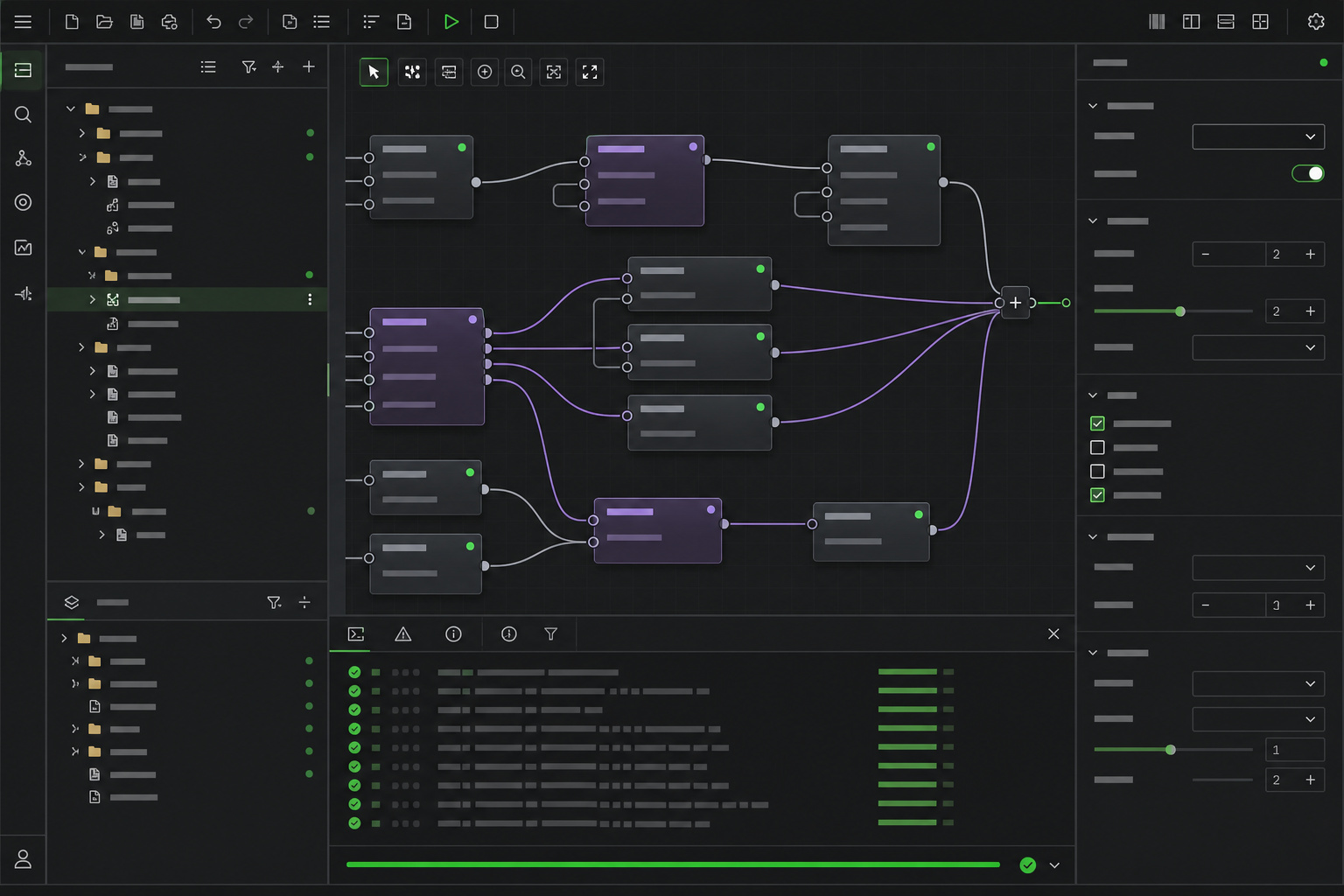
Model ingestion, graph optimization, and hardware-aware compilation.
Explore Compiler →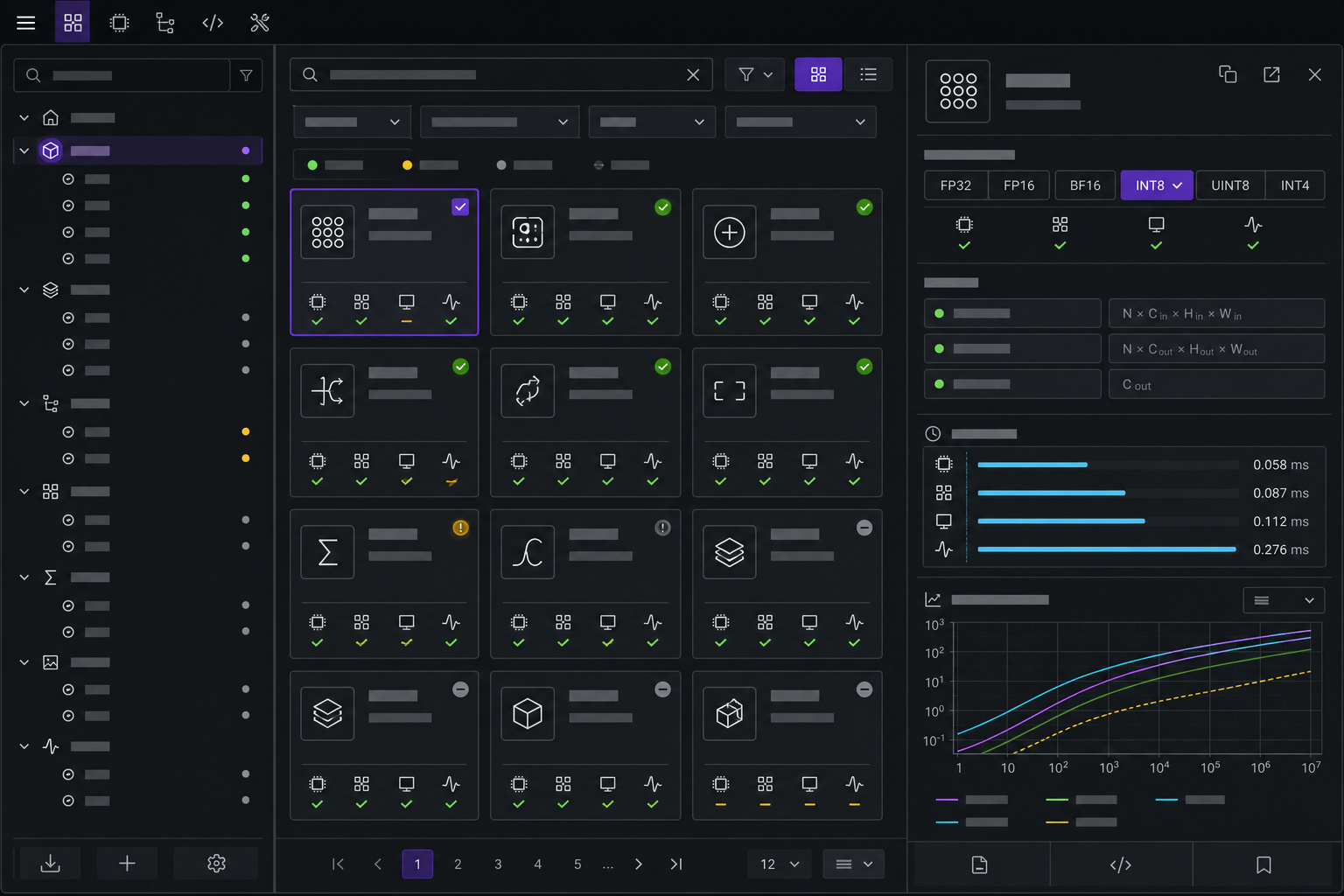
High-performance operators for common model structures.
Explore NN →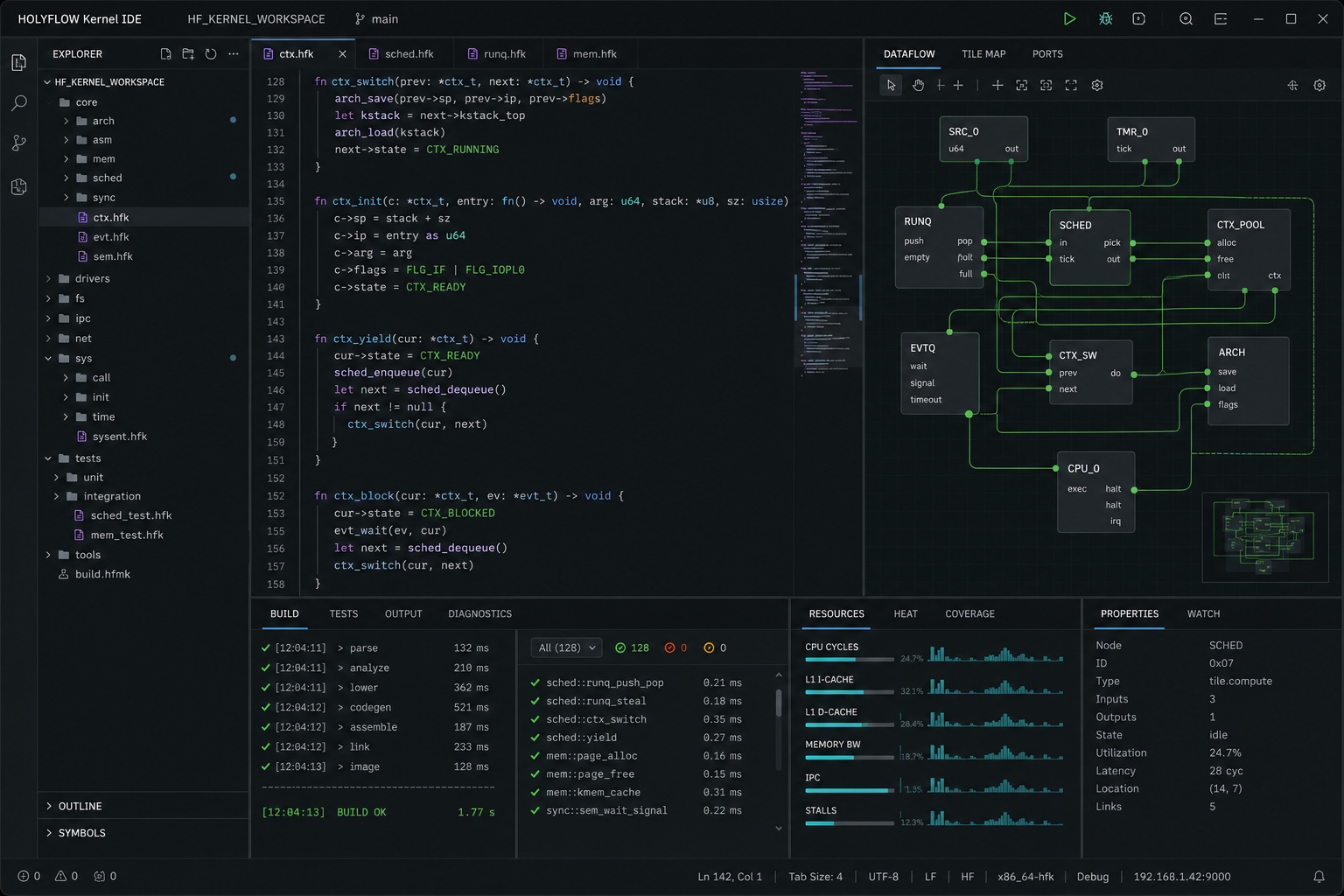
Custom operators and low-level dataflow programming.
Explore Kernel →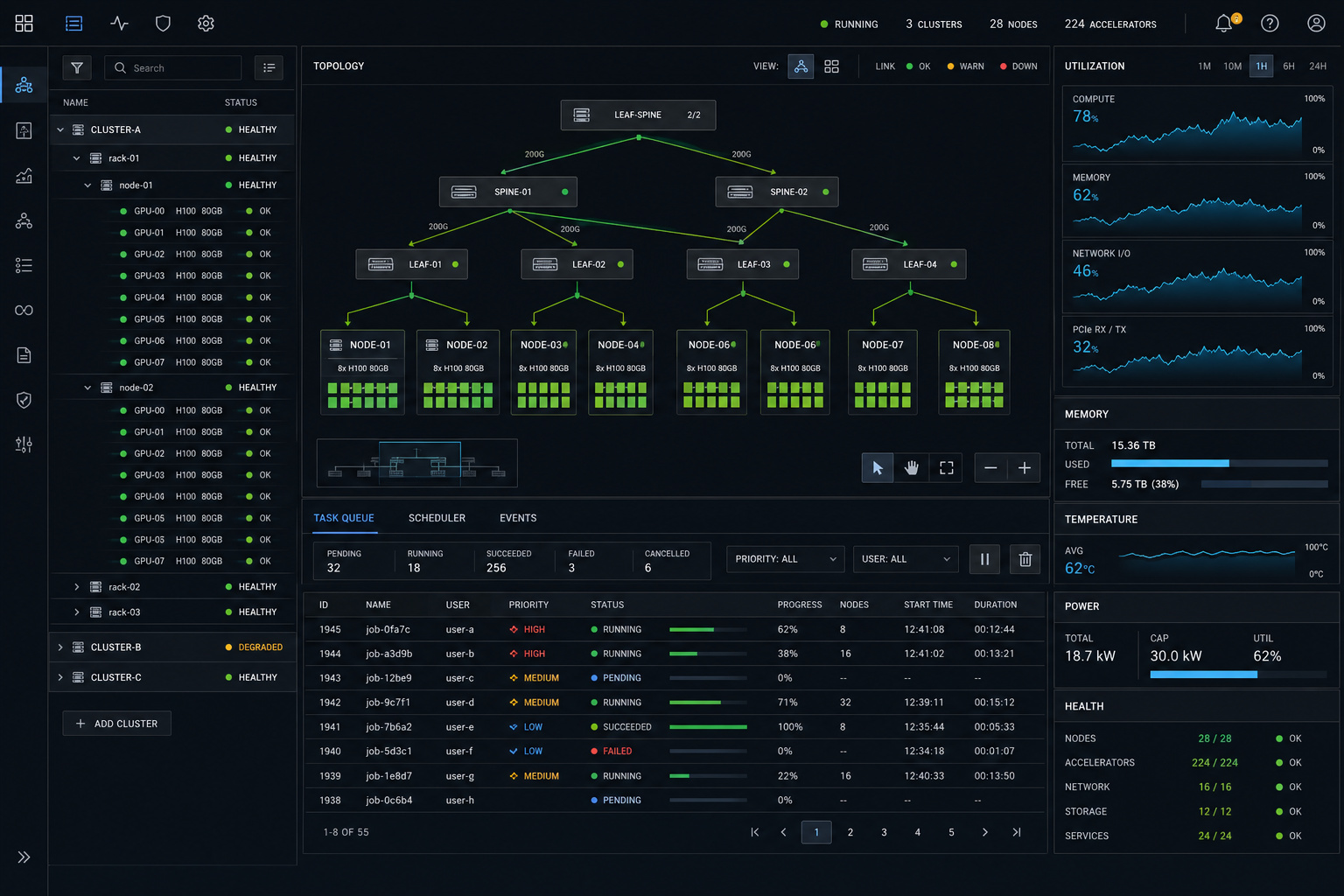
Unified execution from one device to cards and clusters.
Explore Runtime →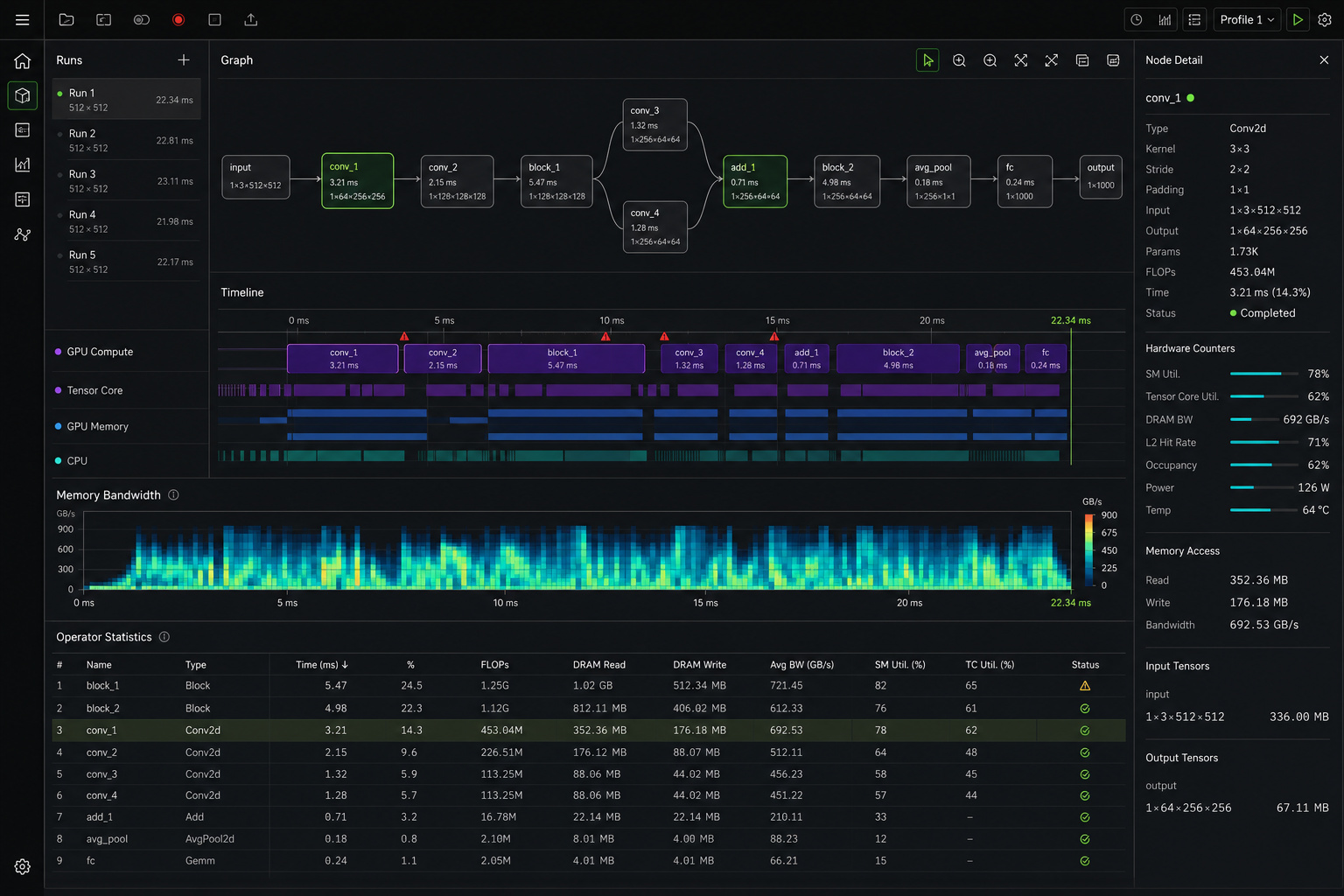
Graph analysis, profiling, debugging, and telemetry.
Explore Studio →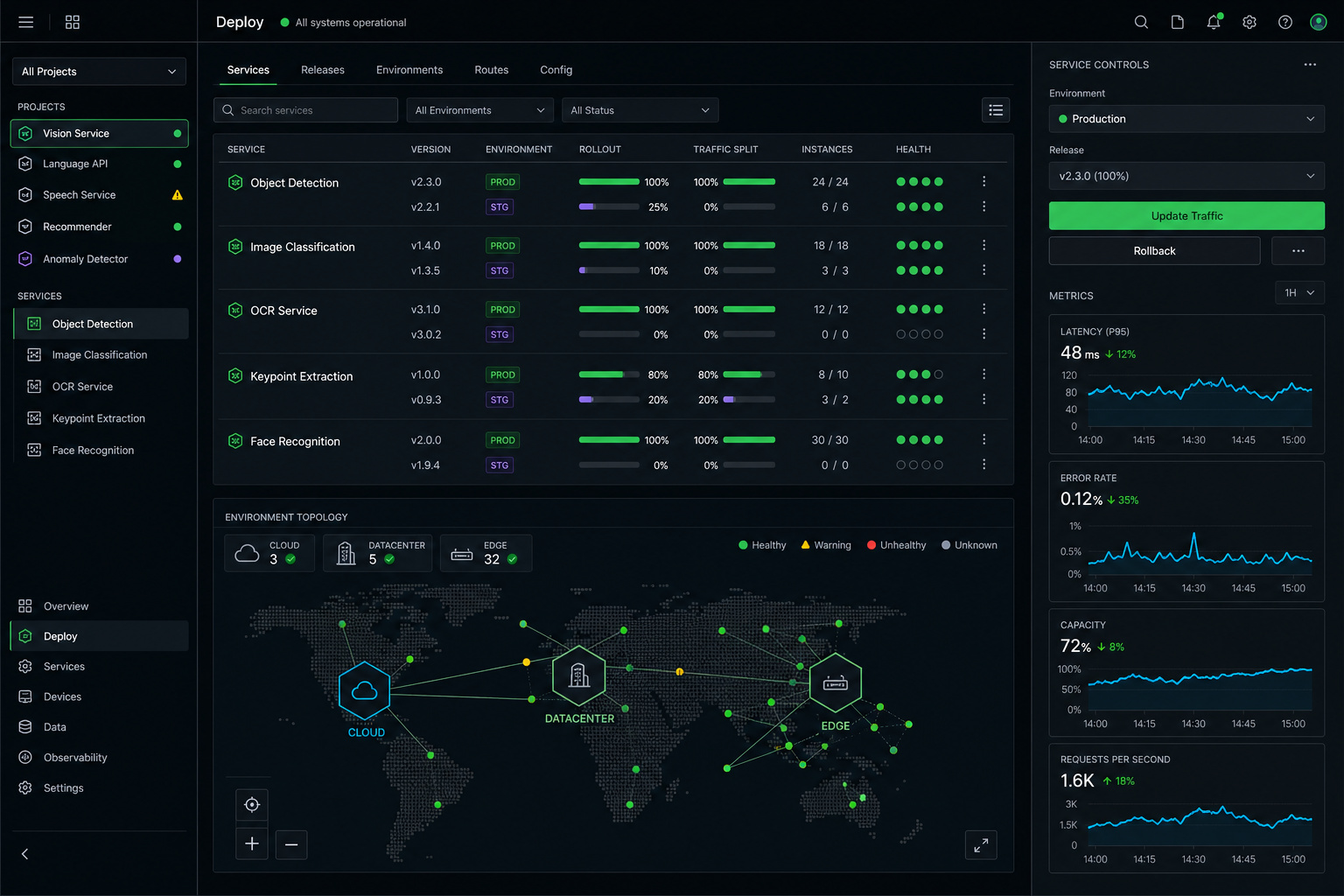
Model serving, releases, and fleet operations.
Explore Deploy →HOLYFLOW COMPILER
Ingest framework graphs and open formats while preserving shape, precision and control-flow information.
Apply constant folding, fusion, layout conversion, precision policy and graph rewrites.
Place data and compute around cores, on-chip memory, bandwidth and topology.
Produce runtime plans, kernel calls and single- or multi-device programs.
A consistent ingestion layer is planned for PyTorch, JAX, ONNX and TensorFlow. Coverage will be governed by a compatibility matrix.
Separate framework semantics, tensor optimization, dataflow planning and kernel code generation for clarity and extensibility.
Plan on-chip reuse, communication overlap, batching and parallel partitioning around the target system.
HOLYFLOW NN
import holyflow as hf

model = hf.load("model.onnx")
target = hf.device("nova-n200")

program = hf.compile(
    model,
    target=target,
    precision="mixed"
)

result = program.run(inputs)HOLYFLOW KERNEL
Read external and on-chip memory, transforming data into target layouts and circular buffers.
Execute matrix, vector, scalar and reduction work while overlapping data movement.
Convert, synchronize and write results for the next operator or device.
Use the default HOLYFLOW NN Python API and let the stack select kernels.
Choose fusion, layout, precision, batching, parallelism and storage policy.
Author data-movement and compute kernels in C++/DSL and register them with the operator library.
HOLYFLOW RUNTIME
Discover cards, nodes and links to build a logical grid for single-card, multi-card and cluster execution.
Manage allocation, transfer, reuse and lifetime across host, device and on-chip storage.
Schedule kernels, events and dependencies while overlapping compute, communication and movement.
Provide broadcast, reduction and all-gather operations adapted to the target topology.
Connect device state, error reporting, retries and fault-isolation strategy.
Place model, runtime and device metrics on one correlated timeline.
HOLYFLOW STUDIO
Inspect subgraphs, operator mapping, fusion boundaries and compiler transformations.
Correlate host, runtime, kernel, memory and communication timelines.
Compare references, precision policy and layer-by-layer error propagation.
Observe temperature, power, links, errors and device health.
HOLYFLOW DEPLOY
Lock model, compiler output, runtime version, target device and validation evidence.
Run models in containers or local services, with planned integration for common inference APIs.
Place, scale and roll out across servers, clusters and edge fleets.
Connect request, model, runtime and hardware signals into an end-to-end service view.
Container services, scheduling, multi-node telemetry and capacity operations.
Single- or multi-card serving, enterprise platform integration and dedicated pools.
Offline execution, signed versions, staged updates, rollback and field health.
CHOOSE YOUR ENTRY
Begin with ingestion, compatibility, compilation and correctness validation.
Compiler → NN → RuntimeInspect graph, memory and timeline, changing only the actual hotspots.
Studio → NN → CompilerAuthor data-movement and compute kernels, then register them with the library.
Kernel → Runtime → NNConnect compiler output with serving, scheduling, telemetry and releases.
Deploy → Runtime → FleetAVAILABILITY & RESOURCES
This page documents the planned HOLYFLOW layers, responsibilities and boundaries.
Track status by model, precision, hardware and software version.
Installation, APIs, tutorials, kernels, tools and release notes.
Serving, containers, cluster integration, edge updates and operations.
SOFTWARE FAQ
No. It is a layered system covering compiler, operator libraries, runtime, kernels, tools and deployment, connected through explicit interfaces.
Mainstream frameworks and open formats are the planned entry points, but actual readiness depends on the model, operators, dynamic shapes, precision and target hardware.
Custom operators and kernels are central to the HOLYFLOW Kernel direction, with planned integration into high-level libraries, compilation and performance tools.
Bring the model, input shapes, accuracy baseline, throughput or latency target, deployment environment and current dependencies, then define a staged validation plan.
READY TO BUILD?